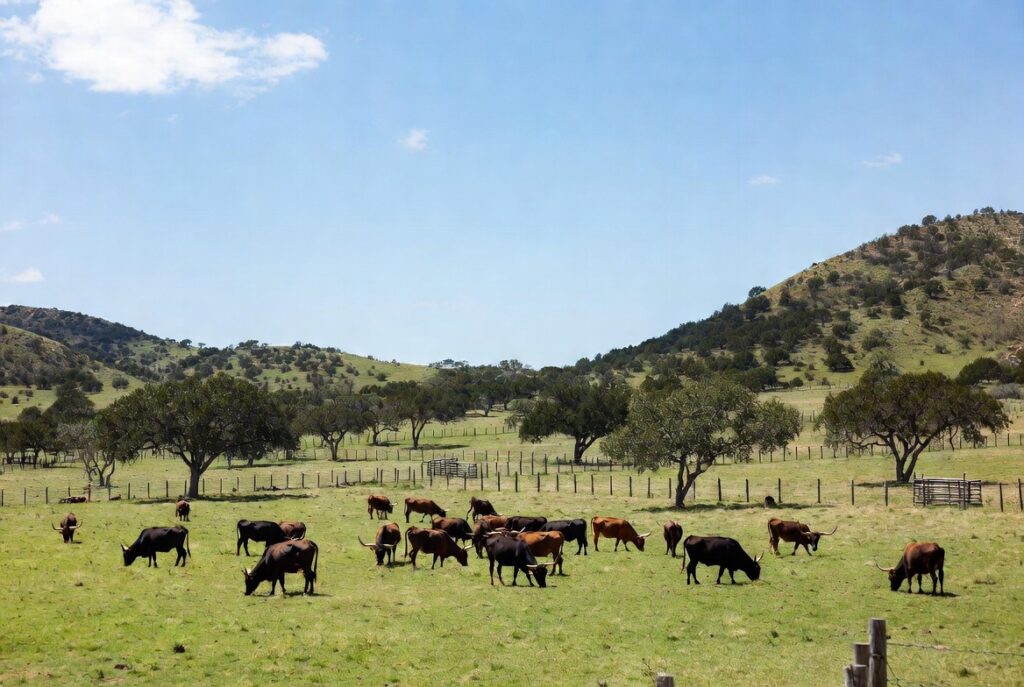

How to Set Up a Cattle Lease on Your Texas Property: A Real-World Guide from 10+ Years of Hands-On Experience
I’m James Bigley, a Texas landowner who’s been managing cattle leases on my properties for over a decade. With a handful of active leases under my belt, I’d call myself mid-level experienced: I’ve learned the ropes the hard way through real deals, real cattle, and a few headaches that taught me what actually works. If you’re a landowner wondering how to lease your pasture for cattle (whether for extra income, keeping your ag valuation for property taxes, or just better land management), this post is for you.
Leasing land for grazing can be a win-win. You get steady revenue or qualify for ag valuation to save on property taxes without the daily chore of running cattle yourself, and the lessee gets affordable pasture. But in Texas, where open-range laws, fence responsibilities, and liability can vary by county, a sloppy handshake deal (or even a basic one like the one I once used) can lead to disputes. I’ll walk you through my step-by-step process, share a real case study from one of my leases, my biggest lessons learned, and even a free improved grazing lease template I rewrote based on what I’ve seen work (and fail).
Texas-Specific Basics: Open Range vs. Closed Range (You Must Know This)
Texas is an open-range state at its core, meaning livestock owners generally don’t have to fence animals in, it’s on the landowner to fence them out (unless your county has passed a “stock law”). But it’s a patchwork: many counties (or even specific precincts) have held local elections to become closed-range areas, requiring cattle to be kept fenced in.
In open-range counties/areas: You (the landowner) are responsible for keeping cattle off your property with adequate fencing. The lessee isn’t automatically liable if animals roam. For example of Edwards County.
In closed-range counties: The lessee must prevent cattle from running at large. This affects liability for escapes, road accidents, or crop damage.
Quick tip: There’s no single official statewide list, check your county commissioners court’s minutes or call them. For example, Guadalupe County (where one of my leases is) adopted stock laws back in 1940 for cattle and other livestock, making it closed range. Some counties (like Andrews, Coke, Culberson, and about 19 others) are statutorily locked as open range for cattle and can’t even vote to change it countywide.
Always confirm your local rules before signing anything, it directly impacts who pays if cattle get out.
My Step-by-Step Process for Setting Up a Cattle Lease
Evaluate your land and goals: How many acres? What’s the carrying capacity (use Texas A&M AgriLife Extension guidelines, it is typically 1 animal unit per X acres depending on your region and forage)? Do you want cash rent, per-head, or even free grazing to maintain your agricultural tax valuation on smaller properties?
Screen the lessee carefully: After 10+ years, my top opinion here is: It all comes down to the operator. Are they active and hands-on? Do they take care of their cattle and your property? I’ve turned down folks who seemed hands-off because I’ve seen neglected fences or overgrazed pastures turn into problems. Ask for references, proof of experience, and (non-negotiable in my book) proof of liability insurance.
Draft a strong written lease: Never rely on verbal agreements. Texas law requires writing for leases over one year anyway. Use resources like the Texas A&M AgriLife Extension’s Ranchers’ Agricultural Leasing Handbook (a fantastic 130-page free guide on grazing leases, liability, and samples) and their Grazing Lease Checklist.
Negotiate key terms: Stocking rate, rent, maintenance, insurance, termination.
Get it reviewed and signed: I always recommend an attorney glance it over, especially for multi-year deals.
Monitor and communicate: Annual walk-throughs and open lines keep things smooth.
Real Case Study: My 8-Acre Guadalupe County Lease (2024). We do larger leases but this is an example for a very small one, because we must combine both properties (lesee’s property 20+ acres) with ours to qualify for ag valuation.
Back in June 2024, I leased an 8-acre tract in Guadalupe County via a simple grazing lease for up to 10 head of cattle. It was a year-to-year auto-renew with 90 days’ notice to terminate. The original agreement was short and sweet, basic terms on use, fences, and mutual indemnification.
What went wrong? Cattle got out a couple times, fences needed repairs, and there was some minor property damage from the herd. We resolved it amicably (they stepped up and fixed things), but it highlighted gaps: Who exactly maintains what? Who’s on the hook for escapes or damage? The lease wasn’t detailed enough on insurance or clear responsibilities.
Lesson learned: Make the lease longer and more specific on coverage. That’s why I rewrote it (see the free template below). After 10+ years, I’ve found that addressing these upfront prevents 90% of headaches.
My Strongest Opinions & Lessons Learned After 10+ Years
Screen operators ruthlessly: Active ones who care for their cattle and your land are gold. Passive ones? Pass.
Free grazing on smaller properties: Totally common and smart for many landowners. It helps maintain ag valuation (and lower property taxes) without you lifting a finger. Just ensure the lease protects you.
Insurance is non-negotiable: The lessee (rancher) must provide proof of liability insurance naming you as an additional insured. Minimum $500k–$1M coverage is a good starting point. It protects everyone.
Common mistakes I see: Vague fence clauses, no stocking limits, ignoring local range laws, or skipping insurance. Successful leases? Clear expectations, fair rent (check local Extension rates), and mutual respect.
Lease length: Year-to-year with notice works for me, flexible but stable.
Key Resources I Recommend
Texas A&M AgriLife Extension: Download the Ranchers’ Agricultural Leasing Handbook and Texas Grazing Lease Checklist. They cover everything from pricing to liability waivers. (Search AgriLife Learn or texasaglaw.org.)
Your local County Extension Agent for stocking rates and fair market rent.
Texas Agriculture Code Chapter 143 for range laws.
Free Tool for You: My Improved Grazing Lease Template
Here’s a rewritten, more detailed version of the lease I used. I expanded it based on my Guadalupe experience, AgriLife best practices, insurance requirements, clearer fence/escape/damage rules, and Texas realities. This is a free starting template only, it is not legal advice. Customize it for your situation, have a lawyer review it, and check your county’s range laws.