
By James Bigley. Published August 23, 2022. Updated November 26, 2026.
Texas is full of towns that rose fast and then emptied out. A mine closed. A railroad missed the place, or a county seat moved. A storm finished what was left. Those same forces left empty towns across the American West. This page is a guide to ghost towns in Texas, built from the Handbook of Texas and other primary records, not from haunted-house tours.
A search for texas ghost towns often mixes living tourist districts with real ruins, and with towns that still have a handful of people and an old courthouse. The honest way is to say what each place was, why it emptied, and what is still on the ground.
Contents: At a glance · What the term means · Indianola · Terlingua · Thurber · Helena · Old Tascosa · Hill Country frontier towns · What buyers and visitors should know · Timeline · Q&A
Ghost towns in Texas at a glance
| Place | County | Why it emptied | What the Handbook still records |
|---|---|---|---|
| Indianola | Calhoun | Hurricanes in 1875 and 1886, then fire | The site had been abandoned by 1887. More than 5,000 people at the 1875 peak |
| Terlingua | Brewster | Quicksilver mining collapsed after World War II | Became a ghost town, then a later tourist draw. 267 people in 2000. The Handbook table later lists 78 in 2020 and 127 in 2021 |
| Thurber | Erath | Coal town faded after railroads switched to oil | A virtual ghost town by the late 1930s. 8 people in 2000 |
| Helena | Karnes | Railroad missed it in 1886. County seat left in 1894 | Practically a ghost town. 35 people in 1990, 2000, and 2014 |
| Old Tascosa | Oldham | Railroad and county seat moved on | Old site was deserted by 1939. Maverick Boys’ Ranch opened there that June |
| Cain City | Gillespie | The short railroad quit in 1944 | Little more than a ghost town by the mid-1960s. About 15 people in 1964 |
| Bankersmith | Gillespie / Kendall | Track abandoned in 1935 | Railroad town from 1913. Tunnel ruins were still visible in the 1980s. The townsite was still in private hands in the 2010s |
This table may be reused under a CC BY 4.0 license, with credit to James Bigley Ranches and the sources named in the article.
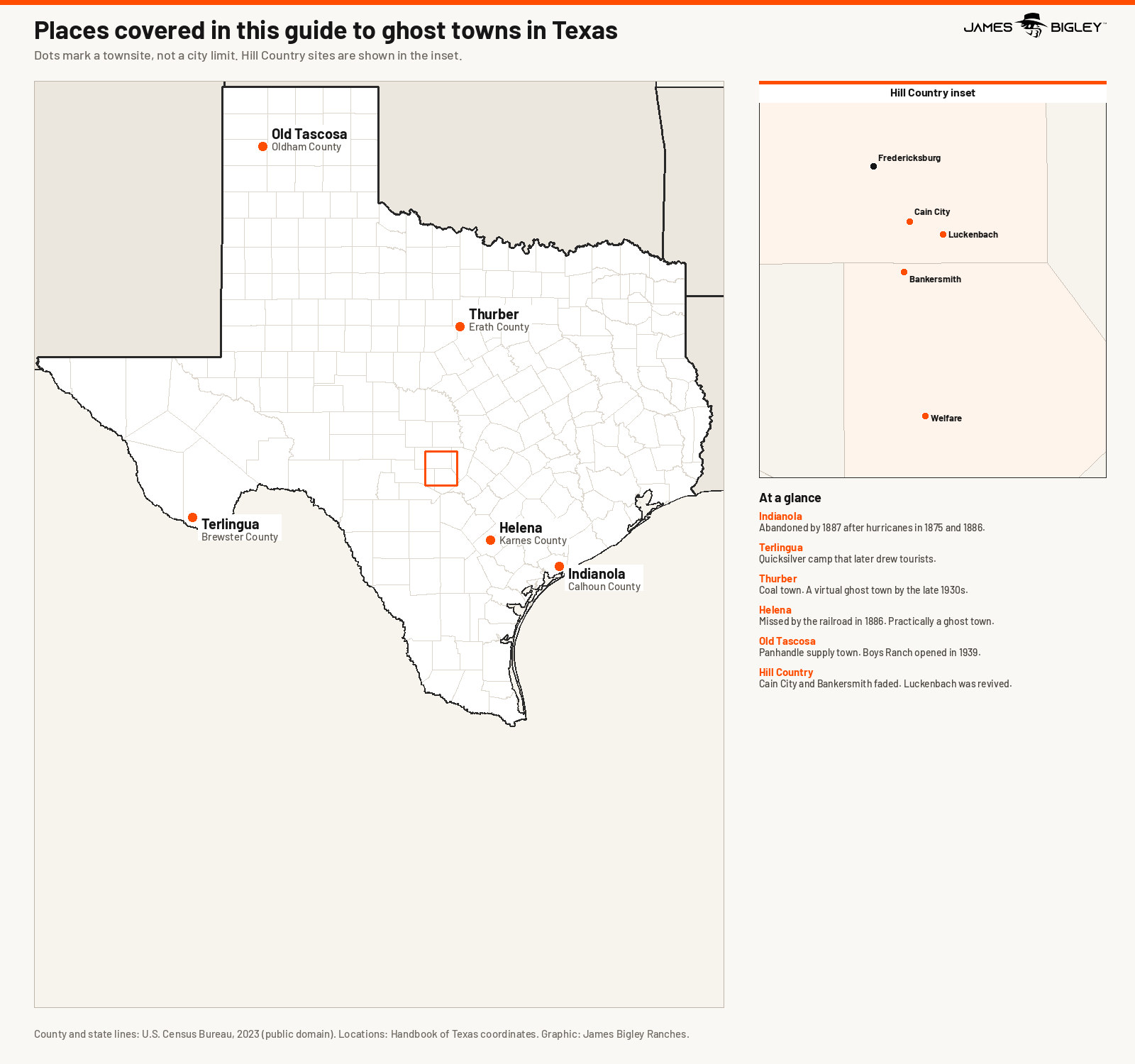
What “ghost town” means here
It is not a legal term. Some of these places are empty. Some still have a few residents, or a later tourist trade built on the ruins. Indianola was abandoned as a site by 1887. Thurber was all but gone by the late 1930s. Terlingua’s mining camp died, then people came back. Helena is, in the Handbook of Texas’s words, practically a ghost town, with a courthouse kept as a museum piece.
A lot of the land around these sites is private. Cemeteries, markers, and museum grounds are one thing. Walking a pasture because a map still shows an old town name is another. Don’t trespass.
The pattern is not unique to Texas. Mining camps from Colorado to Nevada emptied when the ore played out. Railroad towns across the Plains faded when the line missed them, or when the trains stopped. Storms have wiped Gulf and Atlantic ports off the map. The stories below stay with Texas, and with what can be sourced.
Indianola, wrecked twice on Matagorda Bay
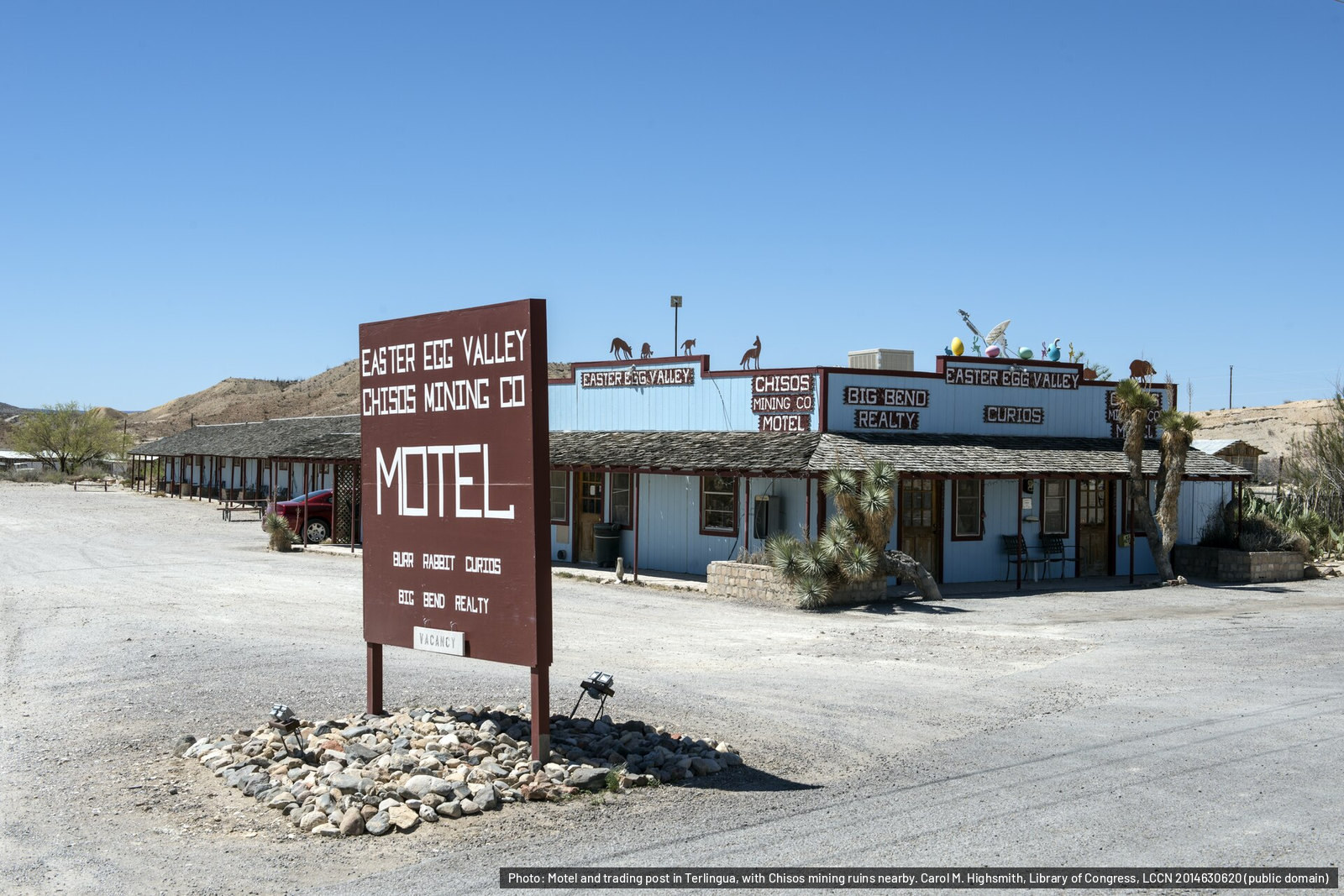
Indianola sat on Matagorda Bay, in Calhoun County. Sam Addison White and William M. Cook laid it out in August 1846 under the name Indian Point. Brownson Malsch’s Handbook of Texas entry is the source for that founding. Two years earlier, in 1844, the Adelsverein, a German emigration society, had already picked a landing on that same beach for settlers headed into western Texas. In February 1849 the town took the name Indianola.
The Handbook calls it the “second port of Texas,” a rank it held until the hurricane of September 16, 1875. The Calhoun County seat was there from 1852 to 1886. More than 5,000 people lived in town at the 1875 peak. One fact reaches past Texas. In July 1869, the Handbook records, the first load of mechanically refrigerated beef ever shipped left Indianola for New Orleans.
The 1875 storm wrecked the port. People rebuilt, though on a smaller scale. Then another hurricane struck on August 20, 1886, and fire ran through what was left. By the next year, 1887, the Handbook says the site was empty.
What you see now is ground, not a harbor. Markers and a cemetery are still there. The Handbook treats Indianola as finished. It is one of the clearest ghost towns in Texas, because the sea and the fire left so little to argue about.
Terlingua, and the quicksilver bust
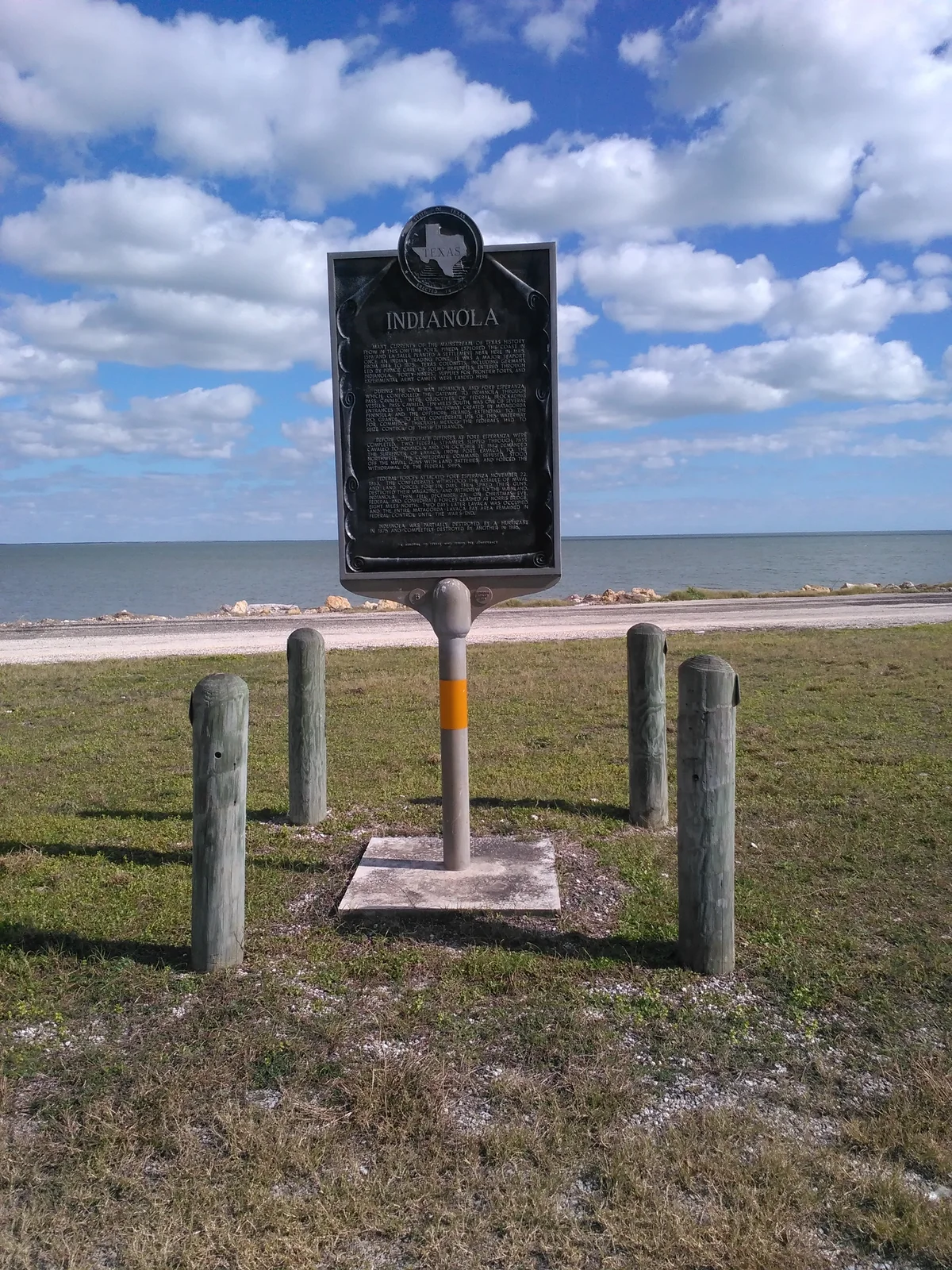
Terlingua is in southwestern Brewster County, north of Big Bend. The name has been used more than once. Kenneth B. Ragsdale’s Handbook of Texas entry notes three separate settlements that carried it. The camp that later emptied was the quicksilver town, built on cinnabar, the ore of mercury.
Howard E. Perry’s Chisos Mining Company ran that camp. Output peaked in World War I. By 1922, the Handbook says, Terlingua was producing 40 percent of the quicksilver mined in the United States. That is a Texas figure with a national reach. Through the 1930s the mines slipped, year after year.
On October 1, 1942, the Chisos company filed for bankruptcy. A later operator kept the works going until the end of World War II, then shut down. Most of the people left. The Handbook’s phrase is that Terlingua became a ghost town. Visitors started coming back in the late 1960s and early 1970s. In 1967, the Handbook records, the Chili Appreciation Society deemed it the “Chili Capitol of the World,” in that spelling.
The Handbook counts 267 people and 44 businesses in 2000. A later table in the same entry lists 58 in 2010, 78 in 2020, and 127 in 2021. So this is not an empty ruin, and it should not be sold that way. The mining camp died. A later tourist town grew up around the Chisos ruins, and that mix is what is on the ground now.
Thurber, a coal town that oil finished
Thurber sat in the northwest corner of Erath County. For a time it was Texas’s main bituminous-coal town. James C. Maroney’s Handbook of Texas entry puts the population, around 1918 to 1920, at perhaps 8,000 to 10,000 people. The Texas and Pacific Coal Company owned the works and the town. After a settlement with the United Mine Workers on September 27, 1903, the Handbook says Thurber was recognized as “the only 100 percent closed-shop city in the nation.”
What finished the mines was a change in the locomotives. Railroads across the United States began burning oil instead of coal. When William Knox Gordon brought in the Ranger field nearby, in 1917, that conversion sped up, and in April 1918 the company itself took a new name, Texas Pacific Coal and Oil Company. Thurber felt the shift at home. By the late 1930s, the Handbook calls it “a virtual ghost town.” The count listed for 2000 is eight people.
The Texas Historical Commission atlas lists the Thurber Historic District on the National Register of Historic Places. The date listed is August 17, 1979, reference number 79002936. What stands now is that district, not a working coal town.
Helena, missed by the railroad
Helena sits in Karnes County, where State Highway 80 meets Farm Road 81, on the east side of a bend in the San Antonio River. Robert H. Thonhoff’s Handbook of Texas entry still calls it “practically a ghost town.”
In 1852, Thomas Ruckman and Lewis S. Owings started a town at Alamita, an older Mexican trading post on the La Bahía Road. They named the new place for Helen, Dr. Owings’s wife. A post office followed in 1853. The next year the two men helped organize Karnes County, and Helena got the courthouse. By the 1880s the count had climbed to somewhere between 250 and 300 people.
The railroad went around it in 1886. A local legend, recorded in the Handbook, says a rancher whose son had been killed in town swore he would kill the town that killed his son, and that the line was then given another route. The vow is legend. The bypass is the fact that matters. In 1894, after a hard-fought election, the county seat moved to Karnes City. Stores followed, to Karnes City or to Runge. The school shut in 1945. The post office closed in 1956. The population was 35 in 1990 and again in 2000, and the Handbook table still shows 35 in 2014.
The 1873 courthouse is still there, along with the old post office, the jail, the John Ruckman Home, and the Sickenius farmhouse, all restored, the Handbook says, as museum pieces. Four historical markers stand in the area. This is a town that shrank after the trains and the courthouse left, not a set of empty streets with nothing on them.
Old Tascosa, and the ranches it once supplied
Old Tascosa stood on the Canadian River in northeastern Oldham County. In 1876, Hispanic pastores led by Casimero Romero settled the creek valley and called the place Plaza Atascosa. The big ranches took over the country after 1875, and Tascosa became the shipping and supply point for the LIT, LX, LS, Frying Pan, and XIT ranches. Oldham County was organized in 1880, and Tascosa got the county seat. A stone courthouse went up. The Handbook also records Boot Hill Cemetery, later spelled Boothill as well.
In 1887 the Fort Worth and Denver City Railway laid track across the northeastern corner of the county. Trade drifted toward the rails. An election in 1915 moved the courthouse to Vega. Only fifteen people were left at Tascosa. The old site sat empty after Frenchy McCormick, widow of the town’s first saloon owner, left in 1939. That June, Maverick Boys’ Ranch opened on the old townsite.
By the 1980s, the Handbook says, the stone courthouse at old Tascosa housed a museum, and Boothill Cemetery was still there. A reconstruction of the original school was in use at the ranch. The institution on that ground today is Cal Farley’s Boys Ranch. The old town is gone. The ranch country around it is not.
Frontier towns in the Hill Country, and the ones that faded
An earlier page on this site treated frontier towns in the Hill Country as a group. A lot of those places never became ghost towns. Fredericksburg, Kerrville, Bandera, Blanco, and others held on as market towns, county seats, or ranch centers. Water, German settlement, and a courthouse were often enough to keep a town on the map. They do not belong on a list of ghost towns in Texas.
Some Hill Country places did fade, or came close.
Cain City, in southern Gillespie County about four miles southeast of Fredericksburg, grew with the Fredericksburg and Northern Railway. That railroad ceased on October 1, 1944. The Handbook of Texas, in an entry by Martin Donell Kohout, says the community was little more than a ghost town by the mid-1960s, with a population estimated at 15 in 1964.
Bankersmith was a railroad town from 1913, in extreme southern Gillespie County near the Kendall County line. The track was abandoned in 1935. The post office had already been discontinued by the 1940s. In the 1980s, the Handbook says, ruins of the old railroad tunnel were still visible. Much of the area land, including the former townsite, remained in private hands in the 2010s. It should not be treated as an empty public ruin.
Albert, also in southeastern Gillespie County, was first called Martinsburg. It took the name Albert in 1892, when Albert Luckenbach moved there from Luckenbach and opened a post office. The store had been torn down by 1985. The town still had about 25 people then, and again in 1990 and 2000.
Grapetown, in southern Gillespie County, declined after the highway was rerouted and the school was consolidated, but the Handbook still counted 71 residents in 1989, plus weekenders on area ranches. Welfare, in west-central Kendall County, had 36 people from 1970 through 2000. Those are faded farm and railroad places. They should not be sold as empty ghost towns.
Luckenbach, a few miles east of Fredericksburg, nearly emptied in the middle of the twentieth century, then changed hands in 1971 and became a music place. It is not a ghost town now. Its story belongs with the ones that almost went under and then took a different turn.
Vanderpool, on the west side of the Hill Country, is a separate place and is not folded into this page.
What buyers and visitors should know
Many sites called ghost towns sit on or next to private land. A marker by the road does not make the pasture public. If there is a museum, a historic district, or a cemetery with posted hours, use those. If there isn’t, look from the right-of-way or leave it alone.
What you will actually see varies. Indianola is a vanished port. Thurber is a historic district with very few people. Helena kept a courthouse and a few restored buildings. Old Tascosa’s old townsite is now a boys’ ranch, with a museum in the old courthouse and a cemetery from the cattle years. Terlingua has ruins and a later tourist trade. Cain City and Bankersmith are much thinner on the ground.
None of this is a land listing, and this page does not quote a price for land nearby. If you are looking at ranch country around one of these places, start with water, access, and whether the acres are really for sale. The history is the reason people search. It is not a substitute for a title search.
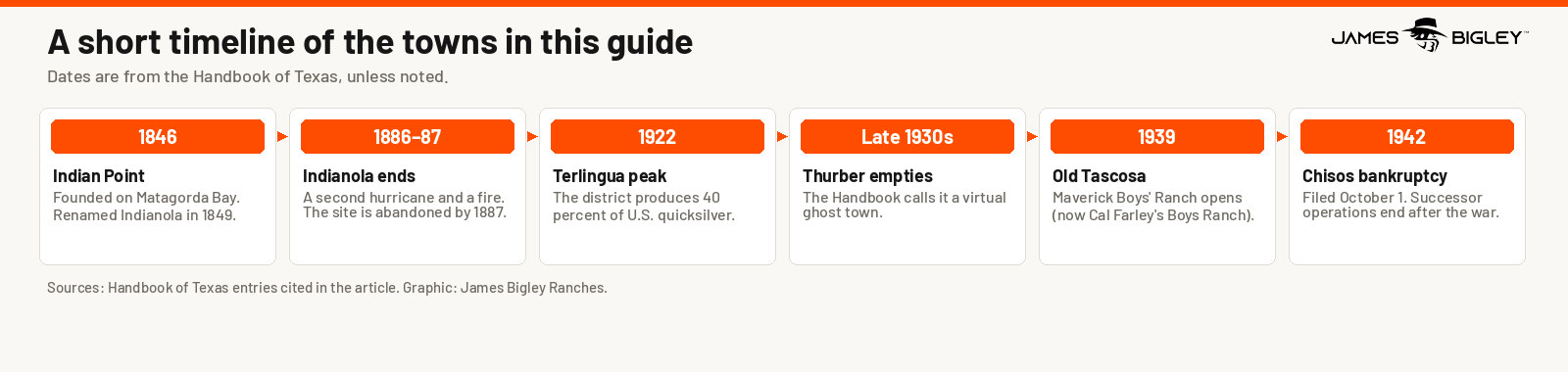
Timeline
| Year | Event |
|---|---|
| August 1846 | Indian Point is founded on Matagorda Bay. The name is changed to Indianola in February 1849 |
| 1852 | Helena is founded in Karnes County |
| 1875 | A hurricane strikes Indianola on September 16 |
| 1876 | Plaza Atascosa, later Tascosa, is settled on the Canadian |
| 1886 | A second hurricane and a fire finish Indianola. The railroad misses Helena |
| 1887 | Indianola is abandoned as a city. The railroad bypasses old Tascosa |
| 1894 | Karnes City replaces Helena as the county seat |
| 1913 | Bankersmith is established as a railroad town |
| 1918–1920 | Thurber’s population may have reached 8,000 to 10,000 |
| 1922 | The Terlingua district produces 40 percent of U.S. quicksilver |
| 1935 | The Bankersmith track is abandoned |
| Late 1930s | The Handbook calls Thurber a virtual ghost town |
| 1939 | Maverick Boys’ Ranch opens at the old Tascosa townsite |
| 1942 | The Chisos Mining Company goes into bankruptcy on October 1 |
| 1944 | The Fredericksburg and Northern ceases on October 1 |
| 1956 | Helena’s post office is discontinued |
| 1979 | The Thurber Historic District is listed on the National Register |
Q&A
What are the best-known ghost towns in Texas?
Indianola, Terlingua, Thurber, Helena, and Old Tascosa are among the best documented. Indianola was a Gulf port abandoned after two hurricanes. Terlingua was a quicksilver camp that later drew tourists. Thurber was a coal town that emptied when the railroads switched to oil. Helena lost the railroad and then the county seat. Old Tascosa supplied the Panhandle ranches, including the XIT, then lost the railroad and the courthouse.
Why did so many Texas ghost towns empty out?
The usual causes were a played-out mine or timber stand, a railroad that missed the town or later shut down, a county seat that moved, or a storm. Those are the same pressures that emptied towns in other parts of the United States. The details differ by place, and they should be sourced.
Is Terlingua still a ghost town?
The mining town became a ghost town after the quicksilver operations ended in the 1940s. People later came back. The Handbook lists 267 residents in 2000, and later table counts of 78 in 2020 and 127 in 2021. What you see now is a mix of Chisos-era ruins and a later tourist town, not an empty camp.
Are Hill Country frontier towns ghost towns?
Most of the well-known ones are not. Towns that kept a courthouse, a market, or a reliable water supply stayed on the map. A few places, including Cain City and Bankersmith, did fade after their railroads quit. Luckenbach nearly emptied, then became a music town after 1971. It is not a ghost town now.
Can you visit these Texas ghost towns?
Some have museums, markers, or a historic district. Some are on private land. Helena has restored buildings used as museum pieces. Old Tascosa’s courthouse became a museum on the boys’ ranch grounds. Thurber is a listed historic district. Indianola is a vanished port with markers and a cemetery. Check what is actually open, and stay off private pasture.